If you’re planning to build a storage or distribution facility, warehouse construction Dubai projects come with their own unique set of challenges. From extreme heat and shifting sand conditions to strict municipality regulations, building a warehouse here isn’t quite the same as building one anywhere else. Whether you’re a logistics company scaling up operations, a retailer needing more storage, or an investor entering the industrial real estate market, getting the fundamentals right from day one can save you significant time and money.
In this guide, you’ll learn what warehouse construction actually involves, the key strategies that experienced builders use to avoid costly mistakes, realistic cost expectations, and how to choose the right team for your project. Let’s get into it.
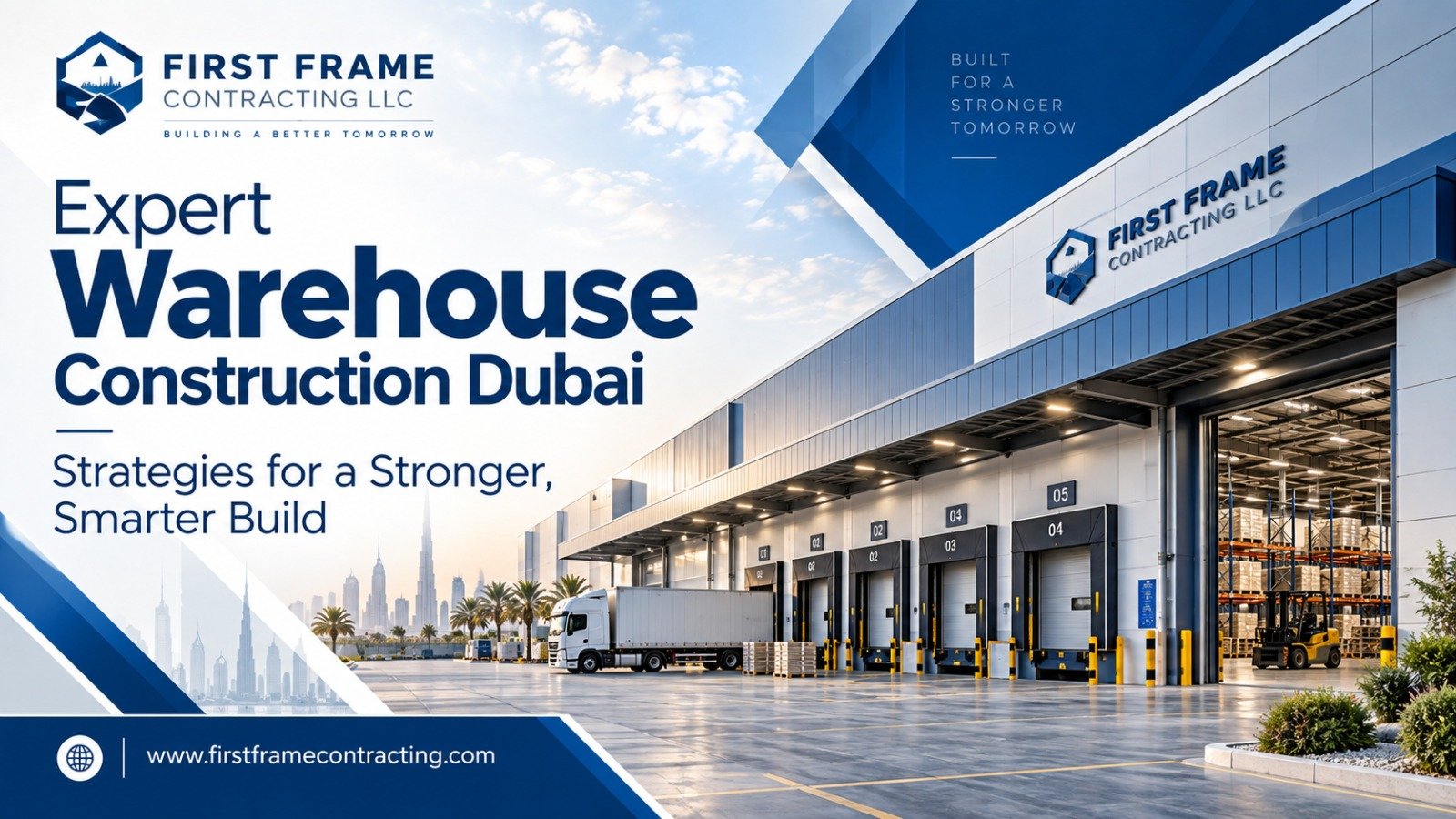
What Is Warehouse Construction in Dubai?
Warehouse construction refers to the design, engineering, and physical building of large-scale industrial or commercial storage facilities. In the UAE, this typically includes steel-framed structures, reinforced concrete flooring, loading docks, insulated roofing, and systems for fire safety, ventilation, and electrical distribution.
Dubai’s industrial zones—such as Dubai Industrial City, Jebel Ali, and Al Quoz—are popular locations because of their proximity to ports, highways, and free zones. But building here also means accounting for high summer temperatures, humidity, and specific civil defense and municipality codes that differ from residential or commercial construction.
Why Proper Warehouse Planning Matters
A warehouse isn’t just a big empty box with four walls. Poor planning at the early stages often leads to problems that are expensive to fix later, such as inadequate ventilation, weak flooring that cracks under heavy machinery, or a layout that can’t accommodate future growth.
Proper planning helps you:
- Avoid costly design changes mid-construction
- Meet Dubai Municipality and Civil Defense approval requirements the first time
- Control your budget more accurately
- Reduce long-term operational costs (cooling, maintenance, energy)
- Build a facility that can grow with your business
This is where working with an experienced team, like the specialists behind First Frame Contracting’s services, makes a measurable difference.
7 Expert Strategies for Warehouse Construction in Dubai
1. Site Selection and Accessibility
Choose a location with easy access to major highways, ports, and labor supply. Also check soil conditions early, since some areas require additional groundwork before construction can even begin.
2. Structural Design
A well-engineered structural design balances cost efficiency with durability. Pre-engineered steel buildings (PEBs) are widely used in Dubai warehouse construction because they’re faster to erect and more cost-effective than traditional concrete structures.
3. Steel and Concrete Considerations
Steel framing offers flexibility for wide, column-free spans—ideal for warehouses that need open floor space for racking and machinery movement. Concrete, meanwhile, plays a critical role in flooring and foundations, where load-bearing strength matters most.
4. Flooring Requirements
Warehouse floors need to withstand heavy loads, forklift traffic, and constant wear. Reinforced concrete with proper curing and sealing is standard practice, and floor flatness tolerances should be discussed with your contractor upfront, especially if you plan to use automated storage systems.
5. Electrical and Plumbing Systems
Given Dubai’s climate, electrical systems must be designed with heat and humidity in mind. This includes proper cable insulation, backup power planning, and adequate lighting for large open spaces. Plumbing needs vary depending on whether the facility includes offices, staff facilities, or cold storage.
6. Fire Safety and Ventilation
Civil Defense approval is mandatory, and fire safety systems—including sprinklers, smoke detection, and emergency exits—must be built into the design from the start. Ventilation is equally important; poor airflow can lead to excessive heat buildup, which affects both stored goods and worker safety.
7. Future Expansion and Flexibility
Smart warehouse design leaves room to grow. Building with modular sections or extra land allocation means you won’t have to start from scratch if your storage needs increase down the line.
Warehouse Construction Cost Per Square Foot in Dubai
One of the most common questions business owners ask is about pricing. While older estimates for warehouse construction cost per square foot in Dubai 2018 are still referenced online, construction costs have shifted over the years due to material price changes, labor costs, and evolving building codes.
As a general guide, warehouse construction costs typically depend on:
- The type of structure (pre-engineered steel vs. conventional)
- Flooring specifications and load requirements
- Insulation and climate control needs
- Site preparation and location
- Finishing level (basic shell vs. fully fitted-out facility)
Rather than relying on outdated figures, it’s best to request a current, project-specific quote, since costs can vary significantly based on scope and specifications.
What Influences Warehouse Construction Costs?
Several factors affect your final construction bill:
- Size and height of the warehouse
- Material choices, particularly steel grade and roofing type
- Site conditions, including soil quality and existing infrastructure
- Regulatory approvals and design complexity
- Additional features like mezzanine floors, cold storage, or office space
- Timeline demands, since expedited construction can increase labor costs
Getting a detailed breakdown from your contractor helps you understand exactly where your budget is going, rather than facing surprise costs later.
How to Choose Warehouse Construction Companies in Dubai
Not all warehouse construction companies in Dubai offer the same level of expertise, so it pays to be selective. Here’s what to look for:
- Proven track record: Ask for examples of completed warehouse or industrial projects.
- Licensing and approvals: Confirm the company is registered and experienced with Dubai Municipality and Civil Defense processes.
- Transparent pricing: A trustworthy contractor provides detailed, itemized quotes rather than vague estimates.
- In-house engineering expertise: Companies with structural and MEP (mechanical, electrical, plumbing) expertise in-house tend to manage projects more efficiently.
- Clear communication: You want a team that keeps you updated throughout the build, not just at the start and finish.
You can learn more about what sets an experienced contractor apart in this related article on choosing the best construction company in Dubai, or explore broader infrastructure project insights to understand how large-scale builds are managed from start to finish.
Common Warehouse Construction Mistakes to Avoid
Even experienced business owners can run into avoidable issues. Some of the most common mistakes include:
- Underestimating the importance of soil testing before construction begins
- Choosing the cheapest quote without checking the contractor’s experience
- Skipping proper ventilation planning, leading to higher cooling costs later
- Failing to plan for future expansion, resulting in costly retrofits
- Not clarifying flooring load capacity before installing heavy racking systems
Avoiding these pitfalls usually comes down to working with a contractor who asks the right questions before construction starts, not after problems appear.
Warehouse Construction Timeline in Dubai
Timelines vary depending on the size and complexity of the project, but a general warehouse build typically involves:
- Design and approvals – securing permits and finalizing architectural and structural plans
- Site preparation – clearing, leveling, and soil treatment
- Foundation and structural work – laying concrete and erecting the steel frame
- Roofing and cladding – enclosing the structure
- MEP installation – electrical, plumbing, and fire safety systems
- Flooring and finishing – final touches, testing, and inspections
A straightforward pre-engineered steel warehouse can often be completed faster than a fully customized concrete facility, so it’s worth discussing realistic timelines with your contractor early on.
Checklist Before Starting a Warehouse Project
Before breaking ground, make sure you’ve covered the basics:
- Defined your storage and operational requirements
- Selected a site with good accessibility and stable soil conditions
- Secured necessary approvals and permits
- Compared quotes from a few reputable contractors
- Planned for future expansion needs
- Confirmed fire safety and ventilation requirements with your contractor
- Set a realistic budget with contingency for unexpected costs
FAQs
How long does warehouse construction take in Dubai?
Most standard warehouse projects take a few months from groundbreaking to completion, though this depends heavily on size, design complexity, and approval timelines.
What is the difference between pre-engineered steel and conventional warehouses?
Pre-engineered steel buildings are typically faster and more cost-effective to construct, offering wide, open spans ideal for storage and logistics operations. Conventional builds may suit projects with more complex architectural requirements.
Do I need special permits for warehouse construction?
Yes. Approvals from Dubai Municipality and Civil Defense are required before construction begins, particularly regarding fire safety and structural compliance.
Can I expand my warehouse later if my business grows?
Yes, if this is planned for during the initial design phase. Modular layouts and extra land allocation make future expansion much easier and more cost-effective.
How do I get an accurate cost estimate for my warehouse project?
The most reliable way is to consult directly with an experienced contractor who can assess your specific requirements, site conditions, and finishing preferences.
Ready to Build Your Warehouse the Right Way?
Whether you’re planning a straightforward storage facility or a fully customized industrial warehouse, getting expert guidance from the start makes all the difference. The team at First Frame Contracting brings hands-on experience in warehouse construction Dubai projects, from initial planning through to final handover.
Learn more about the company on the About Us page, browse more insights on the Blogs section, or reach out directly through the Contact Us page to request a consultation for your next warehouse project.