Professional floor and wall tiling works in Dubai include site assessment, old surface removal, wall plastering, floor screeding, wet-area waterproofing, precision tile installation, grouting, and perimeter movement joints. Because buildings across the UAE experience intense summer heat, constant air-conditioning, and strict community renovation rules, long-lasting tiling depends on proper substrate preparation and climate-rated adhesives rather than surface appearance alone.
Whether you are renovating an apartment in Dubai Marina, upgrading a family villa, or fitting out a commercial unit in Dubai Industrial City, small installation shortcuts often lead to hollow sounds, cracked grout, or tiles lifting within a year. This practical guide from our team at First Frame Contracting L.L.C. explains what proper floor & wall tiling works involve, how to select materials for specific rooms, what local approvals apply, and how to evaluate contractor quotes with confidence.
What Professional Floor and Wall Tiling Works Include
Many property owners assume tiling starts when the first box of tiles is opened. In our experience, laying the tile accounts for roughly half of the technical effort. In fact, everything beneath the surface determines whether the finish stays flat, waterproof, and firmly bonded for decades.
The Eight Stages of Floor and Wall Tiling Works
A complete scope of floor and wall tiling works typically covers eight stages:
- Site Inspection and Measurement: Checking floor levels with laser tools, testing concrete moisture levels, and verifying wall plumbness before ordering materials.
- Demolition and Surface Stripping: Carefully hacking off existing tiles, removing loose mortar beds, and bagging debris for approved Dubai Municipality waste disposal.
- Wall Preparation and Plastering: Applying cementitious or gypsum-based plaster to straighten uneven masonry walls before wall tiles are fixed.
- Floor Screeding and Levelling: Pouring and levelling a sand-cement screed or self-levelling compound so floor tiles sit flat without lippage.
- Waterproofing Wet Zones: Installing liquid-applied membranes or sheet waterproofing in bathrooms, kitchens, and balconies, followed by a 24-to-48-hour flood test.
- Adhesive Selection and Application: Mixing polymer-modified cementitious adhesives suited to the tile size, weight, and location rather than relying on plain sand-cement mortar.
- Tile Cutting, Alignment, and Fixing: Dry-laying rows to balance border cuts, using mechanical levelling clips, and maintaining uniform grout joints.
- Grouting and Movement Joints: Filling joints with cementitious or epoxy grout and applying flexible silicone sealant along corners, wall-to-floor junctions, and expansion gaps.
If your walls have cracks, damp patches, or uneven blockwork, tiling directly over them will transfer those defects to the finished surface. Reviewing proper wall preparation through dedicated Block & Plaster Services ensures a true, load-bearing base before tile fixing begins.
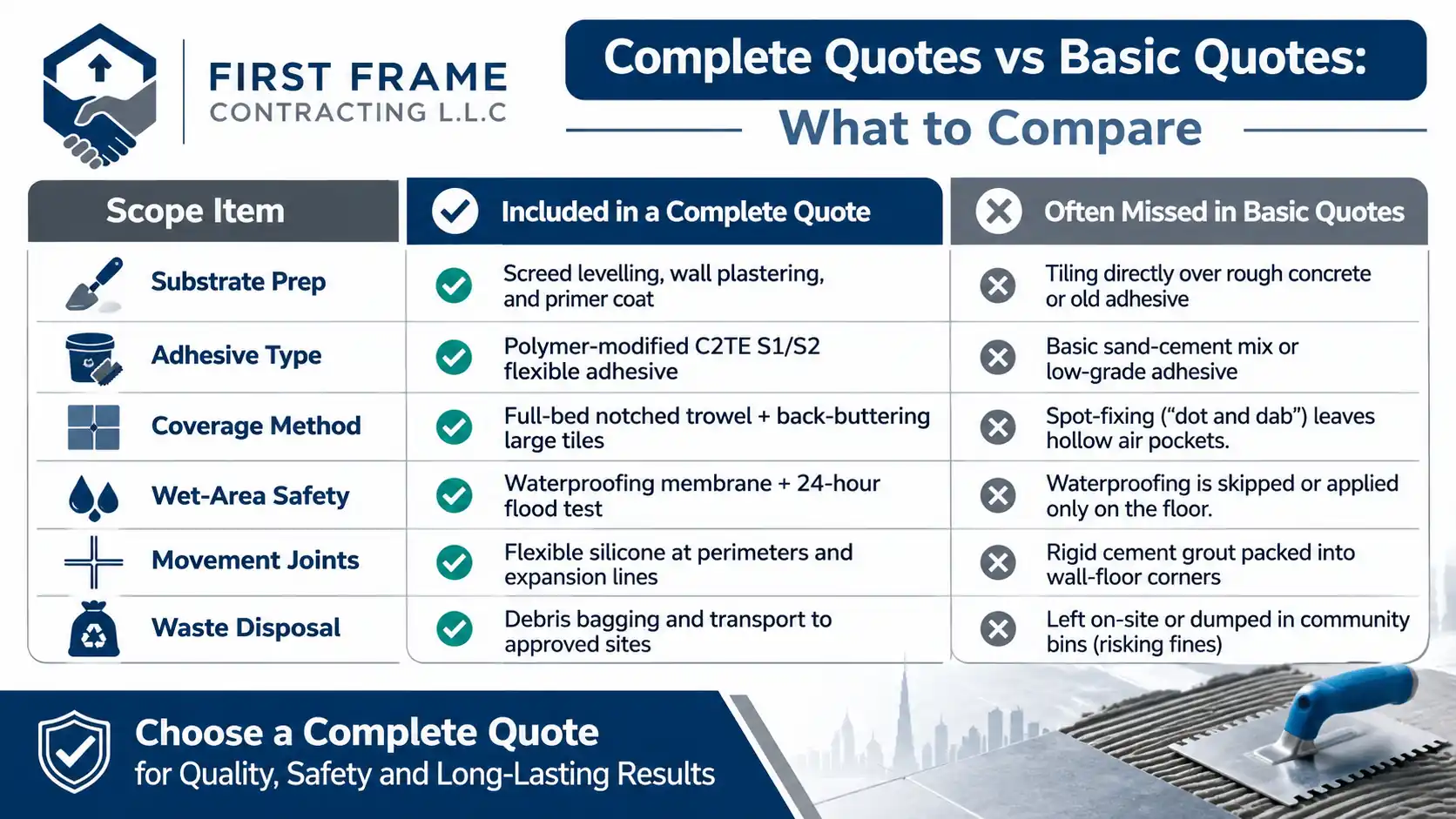
Complete Quotes vs Basic Quotes: What to Compare
Choosing the Right Tiles for Dubai Homes and Commercial Spaces
Dubai properties experience wide temperature swings between air-conditioned interiors (typically 21°C to 23°C) and outdoor temperatures that exceed 45°C in summer. As a result, selecting the right tile body reduces water absorption, thermal stress, and surface wear.
Porcelain Tiles (Vitrified)
Porcelain is fired at higher temperatures than standard ceramic, creating a dense body with a water absorption rate below 0.5%. Furthermore, it handles heavy foot traffic, resists stains, and works across living rooms, hallways, kitchens, bathrooms, and outdoor terraces. Rectified porcelain tiles also have precision-cut edges that allow narrow, modern grout lines of 2 mm to 3 mm.
Ceramic Tiles
Ceramic tiles are slightly softer and more porous than porcelain, making them easier to cut around sockets and plumbing outlets. They perform well on dry interior walls, guest bathroom walls, and light-duty residential spaces, though they are less suitable for exterior walls or heavy commercial floors.
Natural Stone and Marble
Marble, travertine, and granite add natural elegance to villa foyers and feature walls. Because natural stone is porous and sensitive to acidic cleaners, it requires penetrating sealers before and after grouting, as well as white non-staining adhesives so grey cement does not bleed through light-coloured stone.
Large-Format Porcelain Slabs
Slabs measuring 120 × 60 cm, 120 × 120 cm, or larger minimise grout lines and create a spacious visual effect. However, they demand ultra-flat substrates, deformable S1 or S2 adhesives, suction-cup handling tools, and back-buttering on every tile to eliminate air voids. 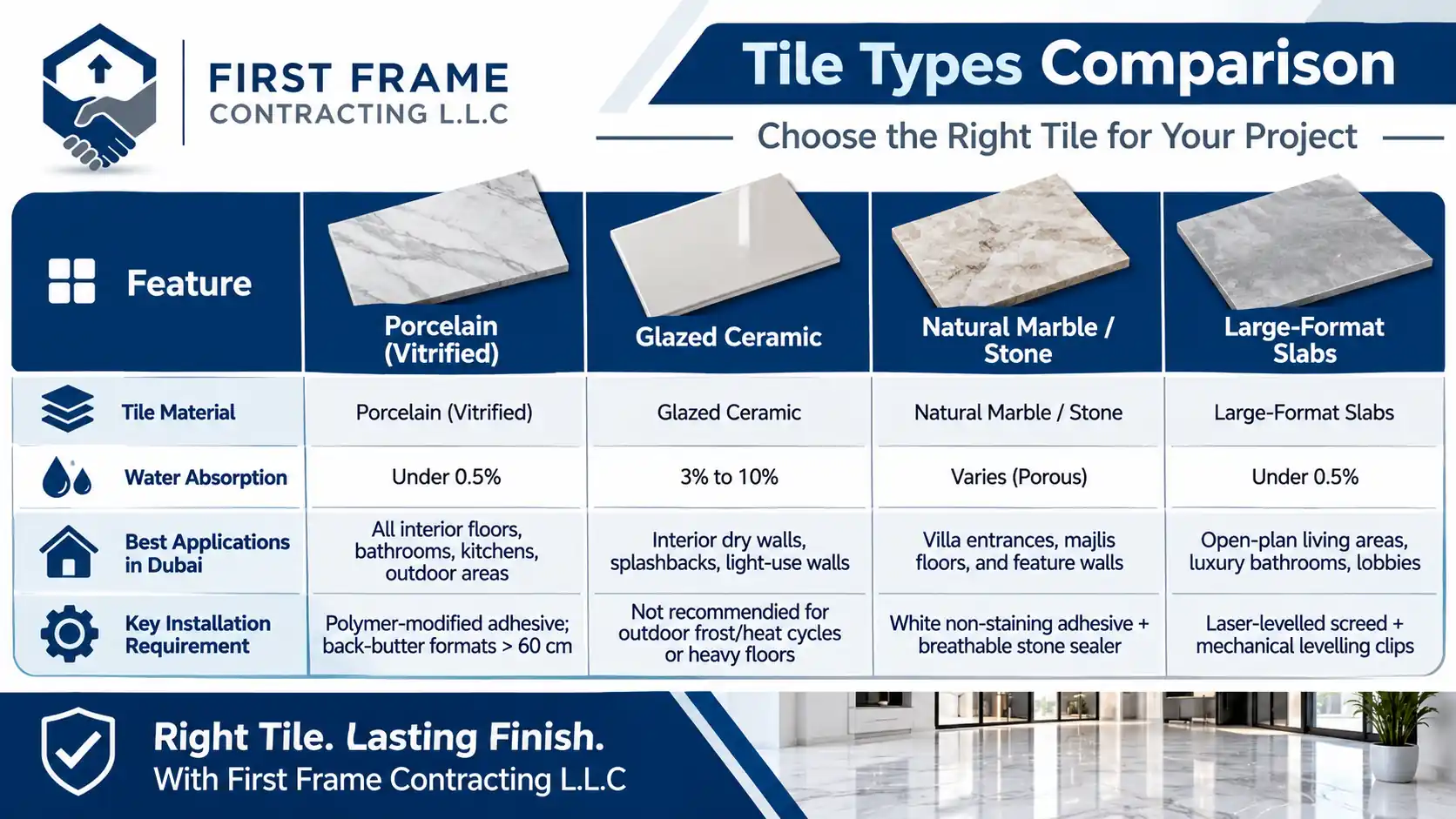
Room-by-Room Guide: Kitchen, Bathroom Shower, and Outdoor Wall Tiles
Different zones inside a property place completely different stresses on tile surfaces, adhesives, and grout lines. Therefore, matching the technical specification to each room prevents premature failure.
Kitchen Wall Tiles: Heat, Steam, and Grease Resistance
Kitchen wall tiles protect plaster and paintwork from cooking splatters, boiling steam, and heat radiated from gas or induction hobs. Gloss or satin-glazed porcelain and ceramic tiles are easiest to wipe clean because oil cannot penetrate the fired glaze.
- Thermal Shock Protection: Leave a safe clearance behind high-heat gas burners and use heat-resistant flexible adhesives rather than standard acrylic mastics.
- Stain-Resistant Grout: Standard cement grout absorbs turmeric, cooking oil, and coffee stains over time. Instead, using two-part epoxy grout or stain-resistant polymer grout keeps kitchen splashback lines clean.
- Practical Surface Texture: Avoid heavily textured natural stone directly behind the stove unless you are prepared to reseal it regularly.
Bathroom Shower Wall Tile: Waterproofing and Wet-Area Standards
A bathroom shower wall tile installation is only as reliable as the waterproofing barrier hidden behind it. Tile glaze is waterproof, but cement grout lines are naturally porous and allow moisture vapour to pass through over repeated daily showers.
- Full Wet-Zone Tanking: Apply a continuous cementitious or polyurethane waterproofing membrane across the entire shower floor and at least 1.8 to 2.0 metres up the shower walls, reinforcing all corners and pipe penetrations with waterproof tape.
- Drainage Falls: Verify that floor screeds slope smoothly toward the linear or point floor drain (typically a 1:80 to 1:100 fall) before fixing floor tiles.
- Mould Prevention: Pair non-porous porcelain wall tiles with anti-fungal, mould-resistant grout, and finish internal vertical corners with sanitary-grade silicone.
Shifting sockets behind a kitchen splashback or relocating bathroom plumbing points should be finished before the first tile goes up. In addition, coordinating electrical and plumbing adjustments with the tiling team avoids cutting into finished walls later. You can explore the full range of our construction and contracting services.
Outdoor Wall Tiles: UAE Sun, Humidity, and Thermal Expansion
Outdoor wall tiles on villa boundary walls, balconies, garden kitchens, and building facades face intense UV radiation, blowing sand, high coastal humidity, and rapid cooling at night. Consequently, indoor adhesives become brittle under these conditions and can detach.
- Exterior-Rated Bodies: Select UV-stable, frost- and heat-resistant porcelain or natural stone cladding designed for exterior exposure.
- Flexible Exterior Adhesives: Use high-deformability polymer adhesives (classified as C2TE S1 or S2 under ISO 13007 / EN 12004 standards) that absorb thermal expansion without shearing.
- Expansion Relief: Include dedicated soft movement joints every 3 to 4 metres horizontally and vertically on exterior walls.
- Mechanical Fixing Rules: For elevated exterior walls (typically above 3 metres) or heavy stone cladding, UAE safety practices and Dubai Municipality specifications require mechanical stainless-steel anchors or ventilated fixing systems alongside high-strength adhesive.
- Paved Surroundings: Outdoor wall tiling often goes hand in hand with interlock fixing for driveways, garden paths, and boundary areas. Planning both together therefore keeps levels, drainage, and finishes consistent.
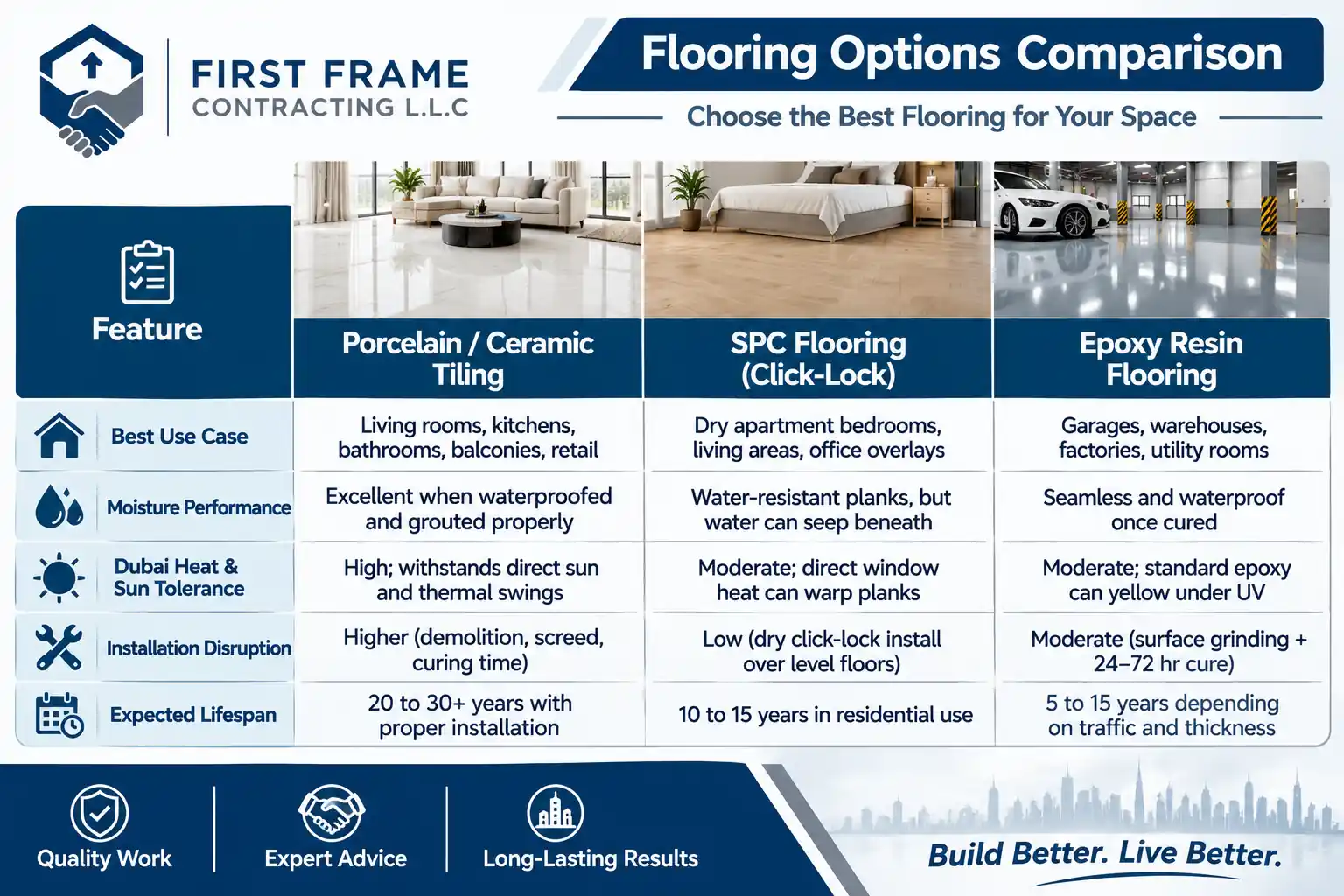
How Tiling Compares to SPC Flooring and Epoxy Flooring
Property owners renovating apartments, garages, or commercial units often compare traditional floor tiles with SPC flooring (stone polymer composite) and epoxy flooring. While porcelain and ceramic tiling remain the core permanent finish for most UAE interiors and wet areas, understanding how these alternatives perform helps you pick the right system for each zone.
SPC Flooring and Epoxy Flooring Explained
SPC flooring consists of a rigid limestone-and-polymer core with a printed vinyl wear layer and click-lock edges. Landlords frequently evaluate it for quick bedroom or living-room makeovers because it installs over existing flat tiles without noisy demolition. However, direct sunlight through unshaded floor-to-ceiling Dubai windows can cause excessive surface heat and plank expansion if expansion gaps are tight.
On the other hand, epoxy flooring is a seamless, poured thermosetting resin system used primarily in villa garages, warehouses, workshops, and industrial facilities in areas like Dubai Industrial City. It resists vehicle tyre marks, oil spills, and heavy forklift loads, though it lacks the decorative warmth and scratch-proof surface of glazed porcelain inside residential living spaces.
Tiling vs SPC vs Epoxy: Side-by-Side Comparison
Step-by-Step Floor and Wall Tiling Installation Process
Knowing the correct sequence of works allows you to verify quality at every milestone on site.
Phase 1: Layout, Surface Priming, and Waterproofing
Step 1: Layout Planning and Dry-Laying. Before mixing adhesive, the tiler snaps chalk reference lines across the room and dry-lays a row in both directions. Good layout planning also centres focal areas and avoids narrow, awkward tile slivers along doorways or walls.
Step 2: Substrate Preparation and Priming. Concrete floors and plastered walls must be clean, dry, structurally sound, and free of paint, oil, or loose dust. Afterwards, smooth concrete surfaces receive an acrylic or quartz-grip primer so the adhesive bonds mechanically.
Step 3: Waterproofing and Flood Testing. In wet rooms, the waterproofing membrane is applied in two perpendicular coats. Once cured, the floor drain is plugged and the area is filled with water for 24 to 48 hours to verify zero leakage to the slab below.
Phase 2: Adhesive, Tile Fixing, and Finishing
Step 4: Adhesive Mixing and Trowelling. First, adhesive powder is mixed with clean water using a mechanical paddle mixer to a lump-free paste. Next, the tiler combs the adhesive in straight, parallel ridges using a notched trowel—never in swirls—so trapped air can escape when the tile is pressed down.
Step 5: Back-Buttering and Tile Fixing. For tiles larger than 30 × 30 cm, spreading a thin skim coat of adhesive onto the back of the tile (“back-buttering”) before pressing it into the combed bed ensures 95% to 100% adhesive contact. Meanwhile, clip-and-wedge levelling systems keep adjacent edges flush while curing.
Step 6: Curing, Grouting, and Silicone Sealing. Tiles are left undisturbed for 24 hours before foot traffic or grouting. After grout joints are cleaned and cured, flexible colour-matched silicone is applied along all wall corners, floor perimeters, and sanitary fixtures.
Common Tiling Failures in Dubai (And How to Prevent Them)
Most tiling defects seen in UAE properties trace back to four preventable installation mistakes:
- Tile Tenting and Buckling: In Dubai, floors exposed to sunlight through large patio doors expand during the afternoon. Without a 5 to 10 mm perimeter expansion gap hidden beneath the skirting board, tiles press against each other and arch upward (“tenting”) with a loud crack.
- Hollow-Sounding Tiles: Tapping a tile with a coin and hearing a drum-like hollow echo means the installer used blobs of mortar (“dot and dab”) instead of a full notched bed. As a result, hollow corners crack easily when furniture or dropped objects hit them.
- Wall Tiles Detaching from Gypsum: Applying cement adhesive directly onto raw gypsum plaster without a sealing primer triggers a chemical reaction (ettringite formation) that breaks the bond and causes wall tiles to fall off.
- Cracked or Discoloured Grout: Grout that crumbles or turns chalky usually means the installer added too much water during mixing or washed the joints with an overly wet sponge too early.
Catching small defects early also keeps repair costs down. For a wider look at caring for tiled floors, walls, and outdoor areas year-round, read our practical guide to villa maintenance in Dubai. You can find more practical advice for property owners on our blog.
Dubai Building Rules, NOCs, and Permits for Tiling Projects
Before starting floor and wall tiling works in Dubai, you must follow community and municipal approval rules. Starting noisy demolition without clearance can result in security stopping your crew and building management deducting fines from your security deposit.
| Property Type | Scope of Tiling Work | Typical Approvals & Rules Required |
| Freehold / Leasehold Apartment | Like-for-like floor or wall tile replacement (no layout change) | Building Management / Master Developer NOC (e.g., Emaar, Nakheel, DAMAC), refundable security deposit, contractor trade licence & insurance |
| Villa in Master Community | Interior retiling or garden/outdoor wall tiling | Community Master Developer NOC; external facade changes may require architectural design approval |
| Wet-Area / Structural Alteration | Moving plumbing points, altering bathroom waterproofing, or removing walls | Master Developer NOC + Dubai Municipality (or relevant Free Zone authority like DDA / Trakhees) building permit |
| Commercial / Industrial Unit | Shop, office, or warehouse tiling fit-out | Landlord NOC + Dubai Municipality / Civil Defence / Free Zone fit-out approval |
In residential towers, noisy demolition and hacking are typically restricted to weekday daytime hours (commonly 9:00 AM to 5:00 PM, excluding weekends and public holidays), and contractors must protect common corridor floors and service lifts with protective boards.
What Affects Floor and Wall Tiling Costs in Dubai?
Quotes for floor & wall tiling works vary because two properties with the same floor area can need completely different preparation work, so a single per-square-metre figure rarely tells the full story. Compare quotes across these six cost drivers:
- Demolition and Debris Disposal: Retiling over a clean, flat screed costs far less than removing double layers of old tiles and hauling rubble away.
- Area and Room Geometry: Small bathrooms and kitchens need more cuts, niches, and pipe penetrations than open floors.
- Tile Size and Material: Standard 60 × 60 cm porcelain fixes quickly, while large-format slabs and marble need specialist tools and slower handling.
- Waterproofing Scope: Full wet-room tanking and flood testing add days but protect you from downstairs leak claims.
- Adhesive and Grout Specification: Flexible C2TE S1/S2 adhesives and epoxy grout cost more upfront but prevent bond failure.
- Building Access and Working Hours: Tower service-lift slots and restricted working hours add logistics time compared with ground-floor villas.
Real costs depend on total area, tile materials, site condition, and preparation scope. Therefore, a site visit before you finalise your budget avoids surprise variation charges.
How to Choose a Reliable Tiling Contractor in Dubai
A licensed, experienced contractor protects both your property value and your timeline. For the full hiring checklist, read our guide on how to hire the right tile fixing contractors in Dubai. In short, verify these essentials:
- Valid UAE Trade Licence: Confirm a valid UAE commercial trade licence for contracting works so community NOCs can be obtained smoothly.
- Itemised Bill of Quantities (BOQ): Ask for a breakdown separating demolition, plastering/screeding, waterproofing, materials, and tile fixing labour, with adhesive and membrane grades specified.
- Multi-Trade Capability: When bathrooms, kitchens, or walls are involved, a team that coordinates plastering, plumbing, electrical adjustments, and general Building Contractingprevents delays between trades.
At First Frame Contracting L.L.C, we provide general construction and contracting services in Dubai, including residential, commercial, and industrial floor & wall tiling works. Our team also handles tile and marble fixing, from surface preparation and plastering to precision fixing and wet-area finishing.
Frequently Asked Questions About Floor and Wall Tiling in Dubai
Can new tiles be installed directly over existing tiles in Dubai apartments?
Yes, provided the existing tiles are firmly bonded with zero hollow spots, the surface is mechanically roughened and primed with a bonding agent, and the added 12 to 15 mm height will not obstruct doors or balcony thresholds. However, in bathrooms where waterproofing must be renewed, hacking off old tiles down to the slab is strongly recommended.
How long does it take to retile a standard bathroom or apartment?
A standard bathroom typically takes 4 to 6 working days, including demolition, waterproofing, 24-hour flood testing, tile fixing, and grouting. A two-bedroom apartment floor replacement generally takes 7 to 12 working days, depending on community working-hour restrictions and screed levelling requirements.
How soon can you walk on newly laid floor tiles?
Light foot traffic is usually safe 24 hours after tile fixing using standard polymer-modified adhesives, allowing the tiler to begin grouting. However, heavy furniture, appliances, and full wet-shower use should wait 48 to 72 hours until grout and silicone sealants have fully cured.
What is the best grout for bathroom shower walls and kitchen splashbacks?
Two-part epoxy grout or high-performance polymer-modified cement grout with anti-fungal additives works best. Moreover, epoxy grout is virtually non-porous, preventing water absorption, mould growth in humid showers, and oil staining behind kitchen stoves.
Do I need a Dubai Municipality permit just to change floor tiles?
For straightforward cosmetic replacement of floor or wall tiles inside an apartment or villa without altering walls, drainage, or structural layouts, you normally only need a No Objection Certificate (NOC) from your building management or master developer. Projects involving plumbing relocation, waterproofing structural changes, or commercial fit-outs require Dubai Municipality or relevant Free Zone authority approval.
Have another question? Browse our FAQs for more answers.
Conclusion: Planning Long-Lasting Tiling Works in Dubai
Successful floor and wall tiling works in Dubai depend on far more than picking an attractive tile design. Because UAE properties face intense summer temperatures, constant air-conditioning, and strict community renovation guidelines, lasting results always start beneath the surface with proper plastering, level screeding, reliable wet-area waterproofing, and flexible polymer-modified adhesives.
Therefore, taking time to verify room-specific tile ratings, confirm building management NOCs, and compare itemised contractor quotes will protect you from hollow tiles, cracked grout, and costly rework later. Whether you are upgrading a residential bathroom, refreshing a villa living area, or fitting out a commercial space, working with a licensed multi-trade contracting partner helps ensure every stage is completed safely and on schedule.
Ready to discuss your upcoming tiling project? Contact our team at First Frame Contracting L.L.C for a site assessment and free quote via WhatsApp at +971 544664100, email info@firstframecontracting.com, or visit our Contact Us page. You can also visit us at Saih Shuaib 4, Dubai Industrial City, Dubai, UAE.