
Plaster works decide how a building looks, how well paint holds, and how many repairs you face in a few years. However, plastering is also easy to get wrong. If the base is poorly prepared or the mix and curing are wrong, cracks and hollow patches usually follow.
This guide explains how crews carry out plaster works and what separates good work from poor work. It also covers site risks and what to check before you hire a plastering contractor in Dubai.
What Are Plaster Works in Construction?
Plaster works are the application of a layer of plaster, usually cement-based, over blockwork, concrete or masonry. As a result, the wall becomes smooth, even and durable. It is therefore the stage between structure and finishes.
In simple terms, plastering work in construction does four jobs:
- First, it levels uneven block or concrete surfaces.
- Second, it protects walls from moisture and weathering, especially externally.
- Third, it creates a base for paint, tiles, texture coatings or wall finishes.
- Finally, it improves the final appearance of walls and ceilings.
Plastering normally follows blockwork and the first-fix electrical and plumbing. After that, painting, tiling and ceiling finishes can start. Therefore, a full building programme needs the trades in the right order. Our building contracting services cover these stages together, so trades don’t clash.
Types of Plaster Works Used in Dubai Projects
Cement plastering work
Cement plastering work is the most common method for villas, warehouses and commercial buildings. First, the plasterer applies a cement and sand mix in coats to block or concrete. As a result, the wall is strong and suits external use. It also works well as a base for paint or tiles. However, the project specification normally sets mix proportions and thickness, so always confirm them with your engineer or consultant.
Gypsum and other finishes
Contractors typically use gypsum plaster for internal surfaces where they want a very smooth finish. However, it does not suit walls that face heavy moisture. In addition, specialist textured and decorative finishes sit on top of a properly prepared plaster base.
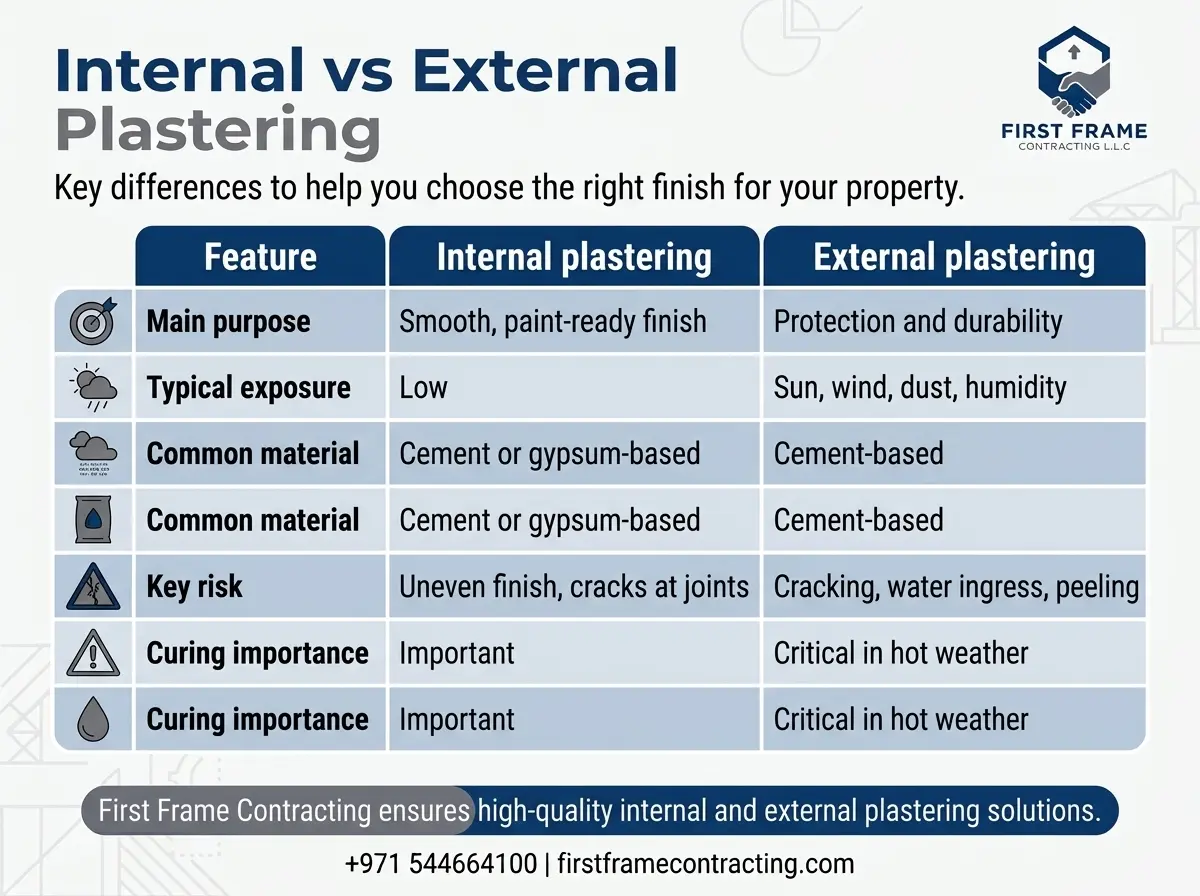
Internal vs external plastering
How Cement Plastering Work Is Done, Step by Step
Whether it is civil plastering work on a warehouse or a villa extension, the sequence is similar:
- Check the substrate. First, walls must be clean, firm and free of dust, oil and loose material. In addition, finish openings, conduits and embedded items first.
- Prepare the surface. Where a block meets concrete, crews commonly use a mesh or bonding treatment. As a result, cracking at the joint is less likely. Follow the project specification.
- Dampen the wall. Because the block absorbs water quickly, pre-wetting stops the wall from pulling moisture out of the plaster too fast.
- Fix guides and screens. Lines, plumb and level guides then control flatness and thickness.
- Apply the plaster in coats. A base coat goes on first, and the plasterer levels it. Then finishing coats follow as required.
- Finish the surface. Next, the plasterer straightens and floats the surface, depending on whether paint, tile or texture will follow.
- Cure properly. Keep the surface damp for as long as the specification says. Unfortunately, crews often skip this step, and it is a common cause of shrinkage cracks.
- Inspect before handover. Finally, check flatness, corners, hollow sound (tap test), cracks and finish consistency before the next trade starts.
Plaster Work in Dubai: Local Conditions That Matter
Good plaster work in Dubai has to account for conditions that don’t affect cooler climates. Moreover, the property type and the permit route also shape the plan.
Heat, wind and curing
- Heat and wind dry the surface quickly. As a result, shrinkage cracks become more likely if crews neglect curing.
- Timing matters too. For example, scheduling external plastering away from the hottest part of the day helps control drying.
- Humidity near the coast can also affect finish and drying time in some areas.
Property types and areas
Property types differ by area. For example, villa communities such as The Springs, The Meadows and Arabian Ranches typically involve villa renovation, extension and repair plastering. In contrast, industrial areas such as Dubai Industrial City typically involve warehouses, workshops and commercial plastering. Therefore, the right specification and access plan change with each.
For example, new blockwork joined to old walls needs careful treatment at the joint. Our guide to villa extension designs shares planning tips. Similarly, repairing old plaster means removing loose areas and matching the surface before repainting. Our villa renovation guide explains how this fits into a bigger project.
Permits and approvals
For structural or external changes, check requirements with the relevant authority before work begins. Also, Dubai Municipality publishes its building and planning circulars online. However, requirements depend on the project type and location.
Common Plastering Defects and How to Prevent Them
| Defect | Likely cause | Prevention |
|---|---|---|
| Hairline or map cracks | Fast drying, poor curing | Careful curing, correct mix |
| Cracks at block/concrete joints | Different materials moving differently | Mesh or bonding at joints |
| Hollow patches | Poor bond, dusty or dry substrate | Clean and dampen the wall. |
| Uneven walls | Poor guides, rushed finishing | Proper screens, supervision |
| Peeling paint later | Moisture or weak surface | Dry, sound plaster before painting. |
In most cases, the fix is better preparation, supervision and curing rather than extra material.
Risk Assessment for Plastering Works
A risk assessment for plastering works identifies hazards before work starts and sets controls. Because every site is different, your HSE officer or consultant should review it and keep it site-specific. For example, the table below is a practical starting framework.
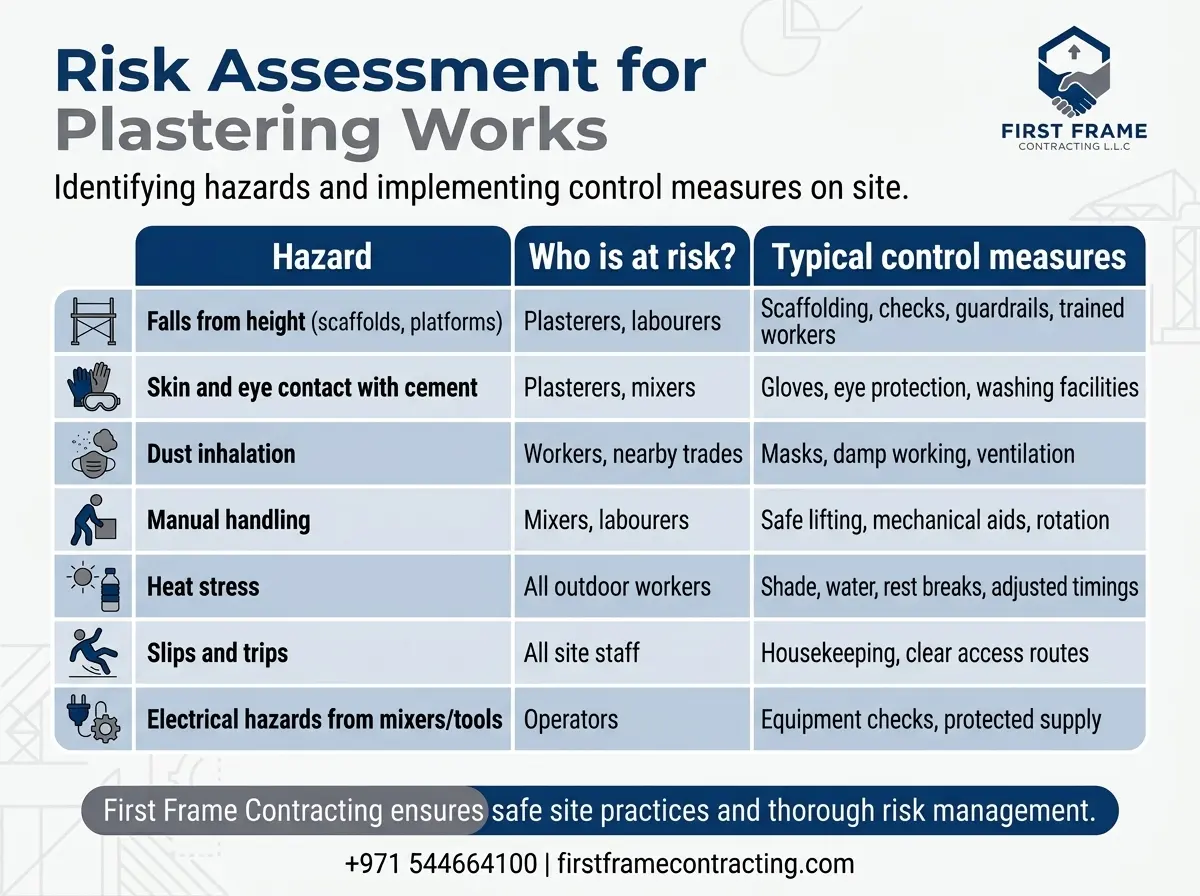
A solid assessment names the task, hazard, people affected, controls, responsible person and review date. Overall, use the requirements of your project, client and local authority as the final reference.
Plastering Subcontractor Work: Scope and Responsibilities
Many projects use a plastering subcontractor, either under a main contractor or appointed directly by the owner. Whoever you appoint, make the following clear in writing:
- Scope: first, state whether the job covers internal, external, ceiling, column or repair.
- Materials: next, say who supplies cement, sand, mesh and bonding products, and to what specification.
- Quality standard: then set tolerances for flatness, finish type and inspection points.
- Access and safety: also cover scaffolding, PPE, site rules and the risk assessment.
- Programme: in addition, agree the start date, coat intervals, curing period and handover.
- Snagging: Finally, state how the contractor will correct defects and by when.
Unclear scope is the main reason for disputes. Therefore, put it in the agreement.
What to Check Before Hiring a Plastering Contractor
Before you commit, work through the checks below. We grouped them so you can compare contractors quickly.
Licence, experience and site inspection
- Valid trade licence. First, ask to see a licence that fits construction or contracting activity.
- Relevant experience. Also ask about similar buildings, such as a villa, warehouse or commercial unit.
- Site inspection. A serious contractor should want to see the walls before quoting. So ask whether they offer inspection and whether it is free.
Quotation, safety and quality
- Itemised quotation. Then check that it shows area, materials, number of coats, labour and exclusions.
- Safety practice. Next, ask how they manage scaffolding, PPE and heat.
- Curing and quality plan. Therefore, be cautious if they can’t explain how they cure and inspect.
Terms and references
- Written timeline and payment terms. Finally, get both in writing.
- References or verifiable reviews. Check Google reviews or ask for client contacts. However, treat unverifiable claims carefully.
If your project also includes tiling, our guide on floor and wall tiling works in Dubai explains what to expect. For broader contractor selection, read our guide to choosing the right construction company in Dubai.
What Affects the Cost of Plaster Works?
There is no single honest price for plastering, because cost depends on the job. The main factors are:
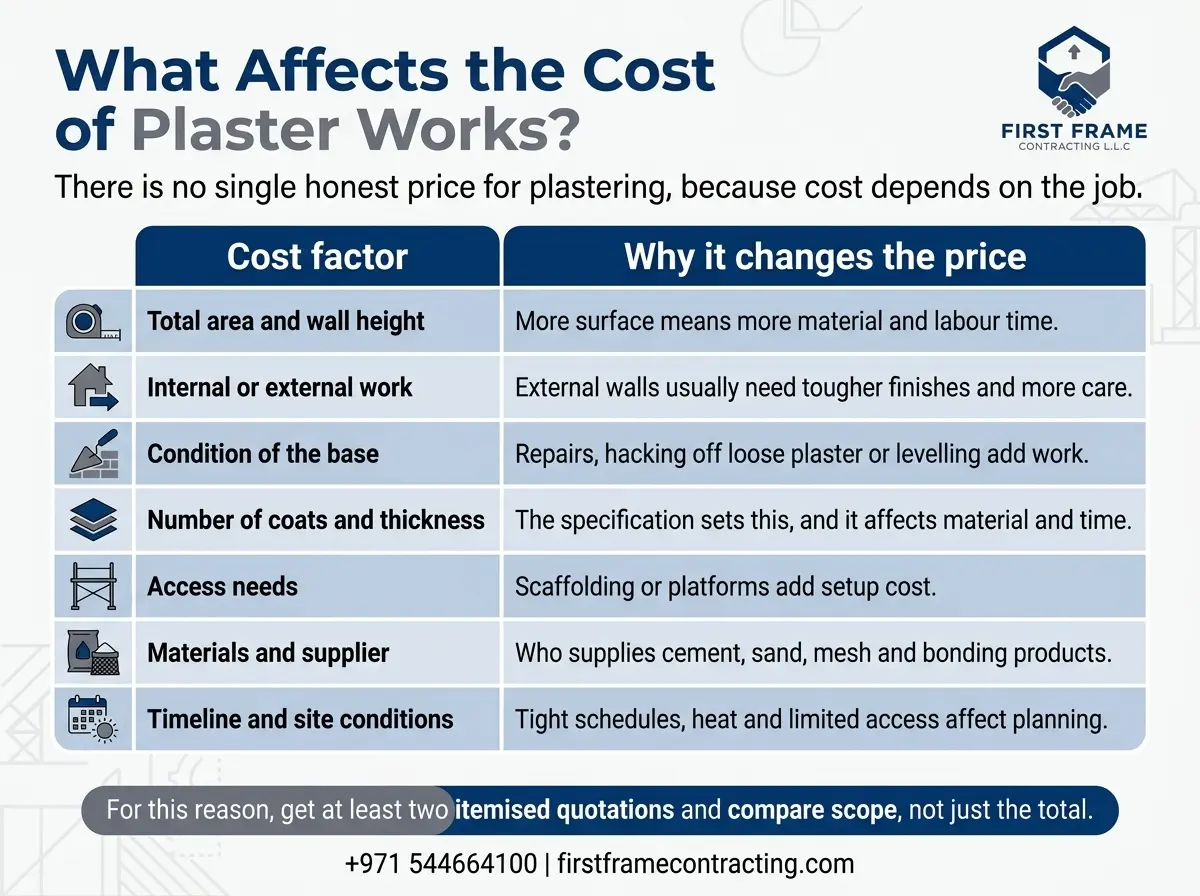
For this reason, get at least two itemised quotations and compare scope, not just the total.
Conclusion
Good plaster works come down to a sound base, the right mix, careful application, proper curing and honest inspection. In Dubai’s heat, curing and scheduling matter even more. Therefore, whether you are building, extending or renovating, define the scope clearly and insist on a risk assessment. Then compare itemised quotes before you choose a plastering contractor.
If you are planning blockwork, plastering or a full finishing package for a villa or commercial property, First Frame Contracting can inspect the site and discuss the right plastering approach. In addition, we can help you plan the sequence of trades.
Get in Touch
Ready to talk about your plastering or finishing project? Contact First Frame Contracting for a conversation about your plans.
- Company: First Frame Contracting L.L.C.
- Location: Saih Shuaib 4, Dubai Industrial City, UAE
- Phone: +971 544664100
- WhatsApp: Chat on WhatsApp
- Email: shehrozmustafa155@gmail.com
- Business Hours: 8:00 AM – 10:00 PM
- Contact Page: Contact First Frame Contracting
Frequently Asked Questions
What is plaster work in construction?
Plaster work is the process of applying a layer of cement or gypsum plaster over walls and ceilings. As a result, the surface becomes smooth, level and durable, and it is ready for paint, tiles or other finishes.
How do I find a reliable plastering contractor near me in Dubai?
First, check the trade licence, ask for similar completed work, and request a site inspection. Then compare itemised quotations and look for verifiable reviews. Also, avoid contractors who quote without seeing the site.
Which plastering contractors in Dubai offer free site inspections?
Policies vary by company, so ask directly before booking. Also, a good contractor should be willing to inspect the walls and explain the scope before giving a price. For example, you can contact First Frame Contracting to discuss an inspection for your project.
How much do plastering contractors in Dubai charge for repairs?
Prices depend on area, wall condition, access and finish. As a result, no fixed rate applies to every job. Therefore, ask for an itemised quote covering materials, labour, coats and any scaffolding.
What should I check before hiring a plastering company in Dubai?
First, check the licence, experience with similar properties, safety practice and curing method. In addition, confirm the written scope, timeline and payment terms. Finally, ask how they will handle defects after handover.
Where can I find customer reviews for plastering contractors in Dubai?
Google Business Profiles are a common starting point. Besides that, you can ask the contractor for client references and speak to previous clients directly.
What is a risk assessment for plastering works?
It is a documented review of hazards such as falls, dust, cement contact, heat and manual handling. Before work starts, the team assigns controls and responsible persons to each hazard.
Why do plastered walls crack?
The most common causes are fast drying, poor curing, weak bond at block and concrete joints, and movement in the structure. However, proper preparation and curing reduce the risk.