Every strong building starts with something most people never see. Behind the concrete walls, floors and columns sits a carefully arranged skeleton of reinforcement bars. Get that skeleton right, and a structure can stand for decades in the UAE’s heat, humidity and coastal conditions. Get it wrong, and cracks, corrosion and costly repairs follow.
That skeleton is built through steel fixing. In this guide, you will learn what it is, the seven practices that separate good work from poor work, where it is used, how to choose a reliable contractor, and the mistakes to avoid. Whether you are a property owner, a developer or a site manager, this guide is written to help you make confident decisions.
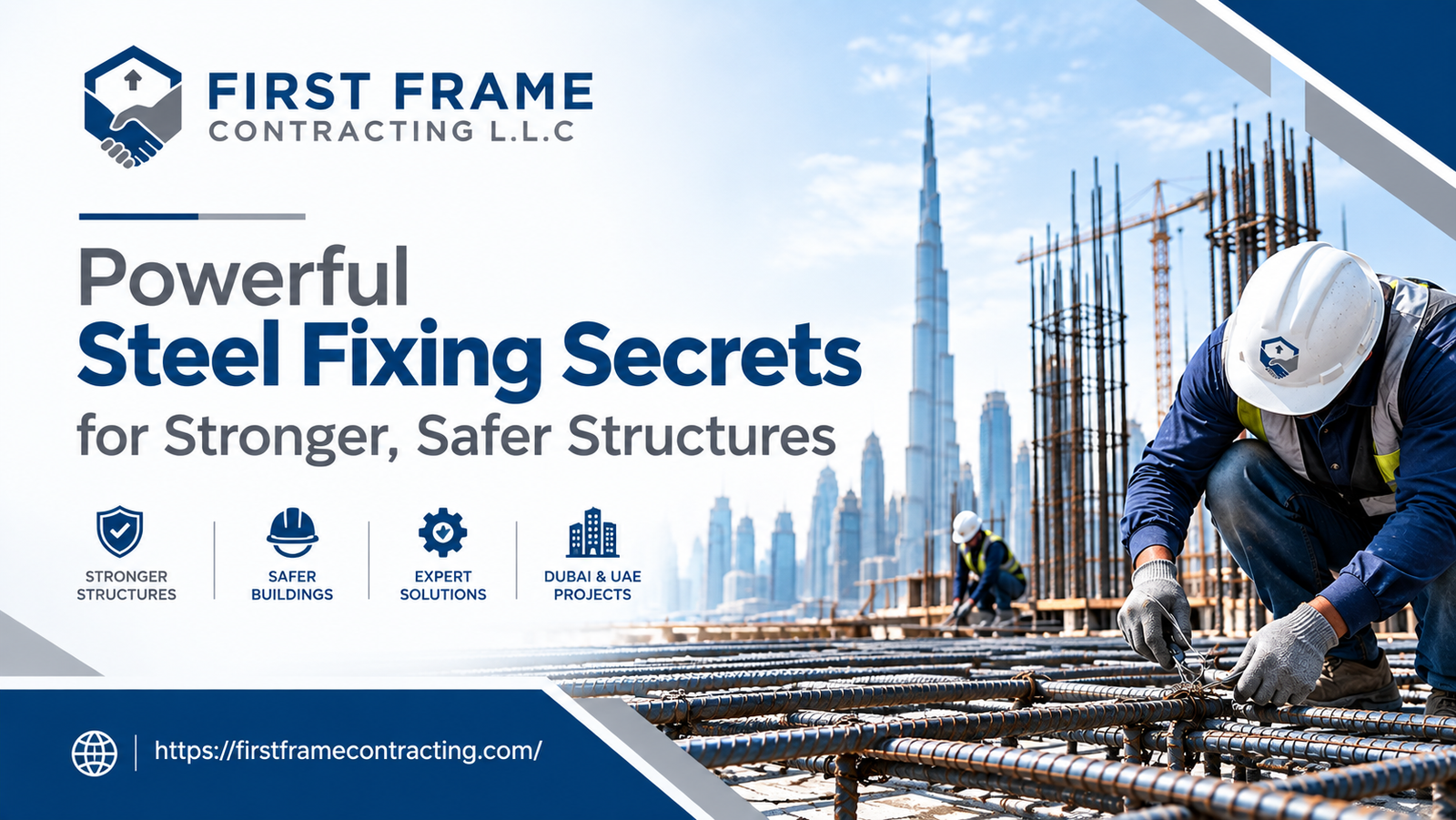
What Is Steel Fixing and Why Does It Matter?
Steel fixing is the process of cutting, bending, placing and tying reinforcement bars (rebar) into the correct position before concrete is poured. The finished steel cage gives concrete the tensile strength it lacks on its own.
Concrete handles compression very well, but it is weak when pulled or stretched. Steel is strong in tension. Together they form reinforced concrete, the material behind most of the buildings, bridges and warehouses you see across Dubai and the wider United Arab Emirates.
Good steel fixing matters for three reasons:
- Strength: Correct bar placement lets a structure carry its designed loads.
- Durability: Proper concrete cover protects steel from moisture and salt, which are real concerns in coastal and humid climates.
- Safety: Reinforcement that follows the engineer’s drawings reduces the risk of structural failure.
7 Powerful Steel Fixing Secrets for Stronger Structures
1. Choose the Right Reinforcement Steel
Not all rebar is equal. Grade, diameter and surface condition all affect performance. In the UAE, projects commonly specify high-yield deformed bars that meet approved standards, and the grade must match the structural drawings.
Check for mill certificates and inspect bars on delivery. Heavy flaking rust, oil or mud on the surface can weaken the bond between steel and concrete. A light film of surface rust is usually acceptable, but anything loose or scaly should be cleaned or rejected.
2. Follow Accurate Bar Placement
The drawings and bar bending schedules are your instructions. Every bar has a specific size, shape, length and location for a reason. Moving a bar a few centimetres to make tying easier can reduce the capacity of a beam or slab.
A good steel fixing team reads the schedule carefully, marks out positions before placing, and confirms each element against the drawings before moving on.
3. Maintain Proper Spacing and Cover
Cover is the distance between the steel and the concrete surface. It shields the bars from air, water and chemicals. Spacing is the gap between bars, which lets concrete flow around them and bond properly.
Use plastic or concrete spacers (often called chairs and cover blocks) at the specified intervals. Too little cover invites corrosion. Too little spacing creates voids where concrete cannot reach. Both problems are hard to fix once the pour is done.
4. Use Reliable Steel Fixing Chemicals Where Required
Sometimes bars must be added to existing concrete, such as in extensions, renovations or retrofits. This is where steel fixing chemicals come in. These are typically epoxy or cementitious anchoring products that bond rebar or anchor bolts into drilled holes.
Tips for using them well:
- Clean the drilled hole thoroughly to remove dust.
- Follow the manufacturer’s mixing and curing instructions exactly.
- Match the product to the load and the environment.
- Never substitute a cheaper product without engineer approval.
Poorly chosen or badly applied chemicals can fail under load, so this step deserves care.
5. Ensure Secure Connections and Tying
Bars are held in place with tie wire, and in some cases with mechanical couplers or welding where the design allows. Ties must be tight enough that the cage does not shift while workers walk on it or concrete is poured.
Lap lengths, the overlap where two bars meet, must follow the design. Short laps are one of the most common hidden defects, and they weaken the load transfer between bars.
6. Follow Safety Standards on Site
Steel fixing is physical work with real hazards. Sharp bar ends, heavy bundles, working at height and hot weather all raise the risk of injury.
Good practice includes:
- Capping exposed bar ends to prevent impalement injuries.
- Using gloves, safety boots, helmets and eye protection.
- Providing shade, water and rest breaks during the UAE’s hot months.
- Using safe lifting methods and secure access.
A safe site is also a better-run site, because careful crews usually produce more accurate work.
7. Conduct Thorough Quality Checks
Inspection should happen before concrete is poured, not after. Check bar size, count, spacing, cover, laps and cleanliness against the drawings. Many projects require sign-off from a consultant or site engineer before the pour is approved.
A simple rule works well: if the steel has not been checked, the concrete does not get poured.
Steel Fixing vs. Other Structural Construction Methods
Reinforced concrete is not the only way to build. Here is how it compares in simple terms.
- Reinforced concrete (steel fixing): Flexible in shape, fire resistant, and widely used for foundations, slabs and columns. It needs curing time and skilled labour.
- Structural steel framing: Fast to erect and ideal for long spans such as warehouses. It needs fire protection and corrosion treatment.
- Precast concrete: Made off-site for speed and consistency, though it still relies on reinforcement inside each unit.
Many UAE projects combine these methods. A warehouse, for example, may use a structural steel frame above a reinforced concrete foundation and slab. If you are planning something similar, our guide to expert warehouse construction strategies in Dubai explains how these elements work together.
Common Steel Fixing Applications
Steel fixing supports far more than just concrete frames. Here are the main areas where it appears.
Steel Door Fixing
Steel doors are popular for security, fire rating and durability. Proper steel door fixing means setting the frame accurately, anchoring it into the structure, and checking alignment so the door swings and locks correctly. A poorly fixed frame can warp, sag or fail a fire inspection.
Fixed Steel Ladder Installation
A fixed steel ladder gives permanent access to roofs, tanks, pits and mezzanines. It must be anchored securely to the structure, with correct rung spacing, handholds and, where required, safety cages or fall protection. Because people depend on it for safe access, the fixings must be strong and regularly inspected.
Reinforced Concrete Structures
Foundations, columns, beams, slabs, retaining walls and basements all rely on well-fixed rebar. This is the core application of steel fixing across the UAE.
Commercial and Industrial Construction
Warehouses, factories, offices and retail buildings need dependable reinforcement for heavy loads, large floor areas and long service lives. In Dubai Industrial City and similar zones, that reliability is essential.
For a wider look at how these projects come together, read our article on choosing a civil construction company in Dubai.
How to Choose Reliable Steel Fixing Companies
Choosing between steel fixing companies can feel overwhelming, because the quality gap between them can be large. Look for these signs:
- Proven experience: Ask for completed projects similar to yours.
- Qualified workforce: Skilled steel fixers, supervisors and engineers who read drawings correctly.
- Safety record: Clear safety policies and trained staff.
- Transparent quotations: Detailed pricing that lists materials, labour and timelines.
- Quality control: A documented inspection process before every pour.
- Local knowledge: Familiarity with UAE regulations, approvals and climate conditions.
You may come across specialist names such as Verity Structural Steel Fixing LLC while researching the market. Whichever provider you consider, compare experience, references and process rather than price alone. The cheapest quote often costs more once defects appear.
Common Steel Fixing Mistakes to Avoid
Even experienced teams slip up. Watch for these problems:
- Wrong bar size or grade: Using whatever is on hand instead of what the drawings specify.
- Insufficient cover: Steel sits too close to the surface and corrodes early.
- Missing or too few spacers: Bars sag under foot traffic and the pour.
- Short lap lengths: Weakens load transfer.
- Dirty bars: Oil, mud or loose rust reduces bond strength.
- Skipping inspection: Rushing to pour before checks are complete.
- Ignoring weather: Hot, windy conditions can affect curing and worker safety.
Catching these early costs very little. Finding them after the concrete has set can cost a great deal.
Steel Fixing Checklist for Construction Projects
Use this quick list before every pour:
- Latest approved drawings and bar schedules are on site.
- Bars are the correct grade, size and condition.
- Bar positions, spacing and counts match the drawings.
- Cover blocks are fitted at the right intervals.
- Laps and anchorage lengths are correct.
- Ties are tight and the cage is stable.
- Anchoring chemicals are approved, and holes are clean.
- Bar ends are capped and the area is safe.
- The consultant or engineer has signed off.
FAQs About Steel Fixing
What does a steel fixer do?
A steel fixer cuts, bends, positions and ties reinforcement bars according to structural drawings, creating the steel framework that is later encased in concrete.
How long does steel fixing take?
It depends on the project size and complexity. A small slab may take a day or two, while a large commercial building can take weeks across several stages. Good planning and early material delivery help keep things on schedule.
Why is concrete cover so important?
Cover protects the steel from moisture and chemicals that cause corrosion. In humid or coastal areas of the UAE, correct cover is one of the best ways to extend a structure’s life.
Can steel fixing be done on existing structures?
Yes. Bars can be anchored into existing concrete using approved steel fixing chemicals, which is common in extensions and renovations. An engineer should confirm the design and product choice first.
How do I know the work is done correctly?
Look for documented inspections, consultant approval before the pour, and a contractor who can explain each stage clearly. If a company resists inspection, treat that as a warning sign.
Why Choose First Frame Contracting for Steel Fixing?
At First Frame Contracting L.L.C, we are based in Dubai Industrial City and understand the demands of building in the UAE. Our approach combines careful planning, skilled crews and strict quality checks, so your structure is built right the first time.
You can learn more about our background on the About Us page, or explore everything we offer on our Our Services page. We work with homeowners, developers and businesses, with clear communication from the first conversation to the final handover.
Conclusion
Strong structures are not an accident. They come from correct steel fixing: the right materials, accurate placement, proper cover, secure connections, safe working practices and honest inspection. Follow the seven secrets above, avoid the common mistakes, and choose your contractor with care.
Ready to start your project? Contact First Frame Contracting today, call +971 544664100, or message us on WhatsApp. Our team is available from 8:00 AM to 10:00 PM and will be glad to discuss your requirements.