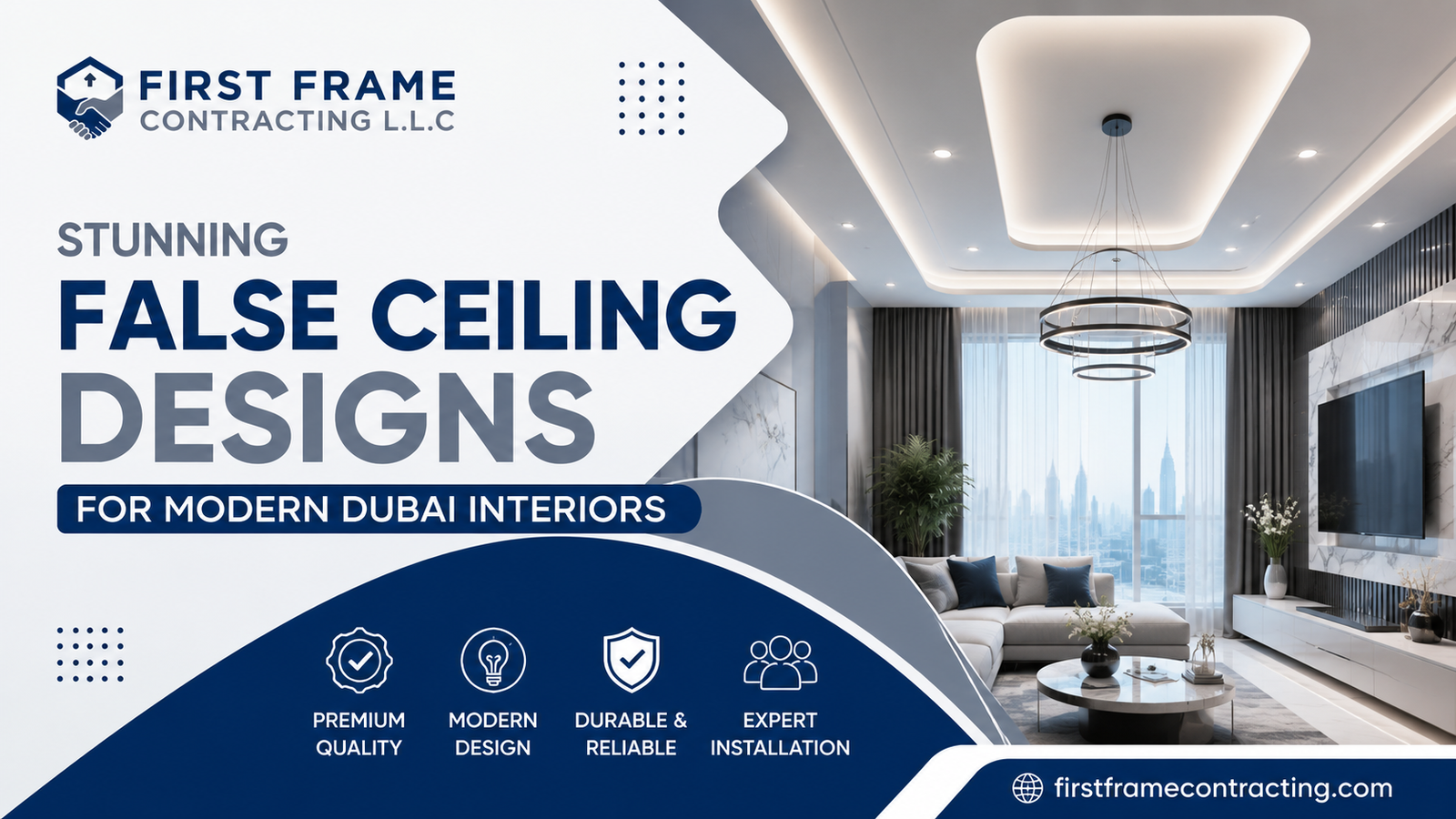
Walk into any beautifully finished home or office in Dubai, and chances are you’re standing under a false ceiling. It’s one of those design elements that quietly does a lot of heavy lifting — hiding wires and ducts, softening harsh lighting, and giving a room that polished, high-end feel without anyone quite noticing how it happened.
If you’re planning a renovation or a new build and wondering whether a false ceiling is worth the investment, this guide walks you through everything: what it actually is, why it’s become a staple in Dubai interiors, the most popular design styles right now, and how to choose the right one for your space.
What Is a False Ceiling?
A false ceiling — also called a suspended or drop ceiling — is a secondary layer installed below the original concrete ceiling. It’s typically built using gypsum board, PVC panels, or metal grids, suspended by a metal frame anchored to the main structure above.
The gap created between the two ceilings isn’t wasted space. It’s often used to conceal electrical wiring, HVAC ducts, plumbing lines, and speaker systems, while also allowing for recessed lighting, cove lighting, and other design features that a flat concrete ceiling simply can’t offer.
Why False Ceilings Are Popular in Dubai Interiors
Dubai’s interior design scene leans heavily toward modern luxury, and false ceilings play a big role in achieving that look. A few reasons they’ve become nearly standard in homes, offices, and retail spaces across the city:
- Better insulation — false ceilings help regulate indoor temperature, which matters a lot given Dubai’s climate and reliance on air conditioning.
- Improved acoustics — the added layer helps absorb sound, which is especially useful in apartments, offices, and villas with open layouts.
- Design flexibility — from minimalist flat panels to elaborate multi-tier designs, false ceilings adapt to almost any interior style.
- Concealed wiring and ductwork — a cleaner, clutter-free look without exposed cables or pipes.
- Increased property value — well-executed false ceiling work is often seen as a mark of quality finishing, which matters in Dubai’s competitive real estate market.
7 Stunning False Ceiling Designs Worth Considering
1. False Ceiling Design for Bedroom
Bedrooms call for a calmer, cozier approach. Popular choices include a single-tier false ceiling design with soft cove lighting around the perimeter, or a tray ceiling that adds subtle depth above the bed. Warm LED lighting in these designs creates a relaxed atmosphere that’s ideal for winding down at the end of the day.
2. False Ceiling Designs for Hall
The hall or living room is usually the centerpiece of the home, and this is where homeowners tend to get more creative. Multi-level false ceilings with layered lighting, geometric patterns, and statement chandeliers are common. A floating ceiling design, where the center panel appears to hover with a hidden light source around its edge, is particularly popular in larger living spaces.
3. Modern False Ceiling Designs for Offices & Commercial Spaces
Commercial spaces prioritize function alongside aesthetics. Grid-based suspended ceilings with integrated lighting and acoustic panels are common in offices, as they make it easier to access wiring for maintenance while keeping noise levels manageable in open-plan workspaces.
4. Cove Lighting Ceilings
This design hides LED strip lighting within a recessed edge, creating a soft glow that spreads across the ceiling rather than shining directly down. It’s a favorite for both bedrooms and living rooms because it adds ambiance without overwhelming the space.
5. Coffered Ceilings
Featuring a grid of recessed panels, coffered ceilings bring texture and a sense of grandeur to formal living rooms, dining areas, and majlis spaces — a style that pairs particularly well with more traditional or classic interior themes.
6. Curved and Wave Ceilings
For those wanting something more architectural, curved or wave-patterned false ceilings create a dynamic, sculptural effect. These are often seen in high-end villas, hotel lobbies, and retail showrooms across Dubai.
7. Minimalist Flat Panel Ceilings
Sometimes less is more. A clean, flat false ceiling with recessed spotlights suits contemporary and minimalist interiors, offering a sleek finish without unnecessary detailing.
Best False Ceiling Materials
Choosing the right material affects both the look and the longevity of your ceiling:
- Gypsum board — the most widely used option, valued for its smooth finish, fire resistance, and flexibility in design.
- PVC panels — moisture-resistant and low-maintenance, making them a solid choice for kitchens and bathrooms.
- Metal (aluminum) panels — durable and modern, often used in commercial or industrial-style interiors.
- Mineral fiber tiles — common in offices due to their acoustic and fire-resistant properties.
- Wood and wood-look panels — used for warmth and texture in feature areas, though typically as accents rather than full ceilings.
How to Choose the Right False Ceiling Design
A few practical factors should guide your decision:
- Room function — a bedroom calls for softer lighting, while a hall can support bolder, layered designs.
- Ceiling height — lower ceilings suit single-tier or flat designs, since multi-level ceilings can make a room feel cramped.
- Budget — gypsum tends to offer the best balance of cost and design flexibility.
- Lighting plan — decide early whether you want recessed spotlights, cove lighting, or a mix, since this affects the structural design.
- Existing interior style — the ceiling should complement your flooring, furniture, and wall finishes rather than compete with them.
False Ceiling Cost & Installation Factors in Dubai
Costs vary depending on the material, design complexity, room size, and lighting requirements. Simple flat gypsum ceilings are generally the most budget-friendly, while multi-tier or curved designs with integrated lighting cost more due to the additional structural work and finishing involved.
Other factors that influence pricing include the number of light fittings, the need for acoustic or moisture-resistant materials, and whether the existing ceiling requires significant preparation work before installation. For an accurate estimate tailored to your space, it’s best to consult directly with a contracting team — you can explore First Frame Contracting’s services for a clearer picture of what’s involved.
Common False Ceiling Mistakes to Avoid
- Ignoring ceiling height — overly elaborate designs in rooms with low ceilings can make spaces feel smaller.
- Poor lighting planning — deciding on lighting after installation often leads to costly rework.
- Choosing the wrong material for wet areas — using standard gypsum in bathrooms or kitchens without moisture resistance can lead to damage over time.
- Overlooking maintenance access — especially in commercial spaces, ceilings should allow easy access to wiring and ducting for repairs.
- Hiring inexperienced installers — poor installation can lead to sagging, cracking, or uneven finishes down the line.
When to Hire a Professional Contractor
False ceiling installation involves structural framing, electrical coordination, and precise finishing — it’s not a straightforward DIY project. A professional contractor ensures the framework is properly anchored, wiring is safely concealed, and the final finish is smooth and long-lasting.
This is particularly important in Dubai, where building codes and quality expectations are high. Working with an experienced team, like First Frame Contracting, means the design, materials, and installation are all handled with the right expertise from start to finish. Their work on large-scale infrastructure projects reflects the same attention to detail applied to interior fit-outs like false ceilings.
FAQs
1. How long does false ceiling installation take?
Most residential rooms take anywhere from two to five days, depending on the design complexity and room size.
2. Is a false ceiling suitable for low-ceiling rooms?
Yes, though a simple single-tier or flat design is recommended to avoid reducing headroom too much.
3. Can false ceilings help with cooling costs in Dubai?
Yes, they add an extra insulating layer that can reduce heat transfer, easing the load on air conditioning systems.
4. Do false ceilings require regular maintenance?
Generally minimal — occasional dusting and periodic checks around light fittings are usually enough.
5. Which material is best for a false ceiling in a bathroom?
PVC panels are typically preferred for wet areas due to their moisture resistance.
Final Thoughts
A well-designed false ceiling does more than fill space overhead — it shapes how a room feels, hides the practical clutter of wiring and ducts, and adds a layer of finish that’s hard to replicate any other way. Whether you’re planning a cozy bedroom retreat or a statement-making living room, the right design and materials make all the difference.
If you’re ready to bring one of these ideas to life, get in touch with First Frame Contracting for a consultation tailored to your space and budget. You can also browse their blog for more interior and construction insights, or learn more about the team behind the work.